About SMASH
Meet the Team
6165 MSET Cuttlefish
We’re a FIRST Tech Challenge robotics team at Saratoga High School founded in 2012. We consistently compete at the highest level and have won multiple international awards. Since 2022, we have been using our decade of robot-building experience to create pumpkin smashers for our community.
SMASH is completely student driven. We design and build the machines, do outreach, and run the event ourselves. Planning starts as early as July with over forty students to ensure the event’s success.
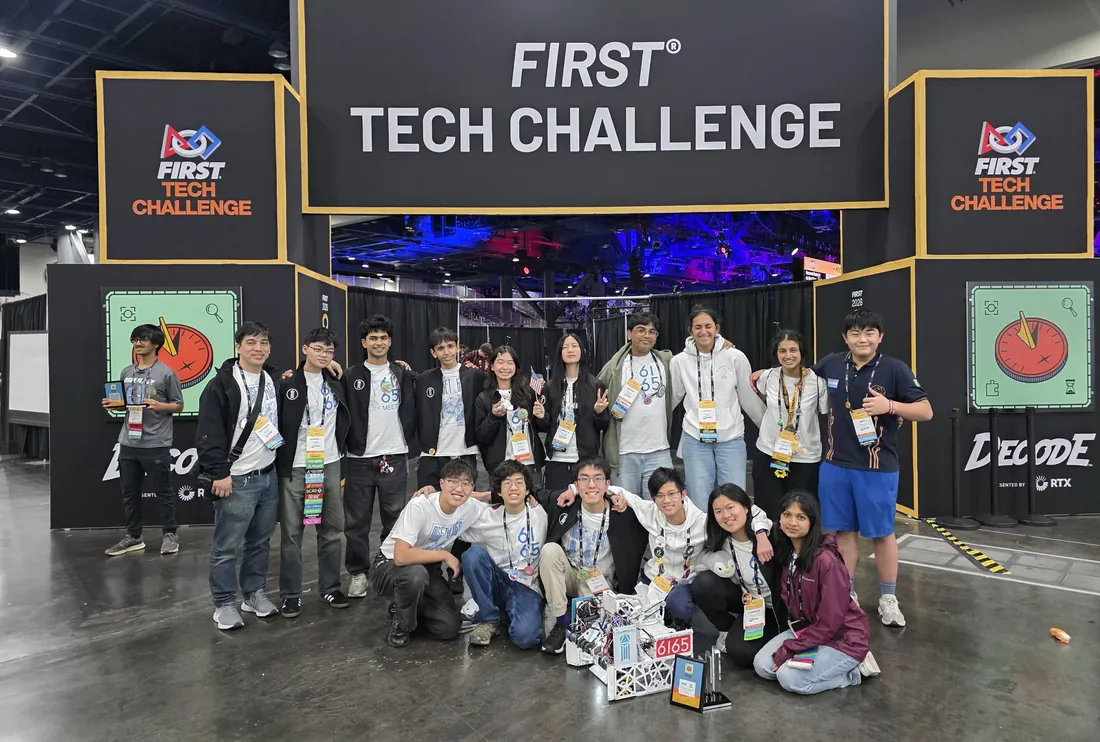
MSET Robotics
MSET stands for Mechanical Science and Engineering Team. It’s the organization behind robotics at Saratoga High, and it fields teams in both FIRST Tech Challenge and FIRST Robotics Competition. It also runs outreach with the district’s middle and elementary schools.
- Team
- 6165 MSET Cuttlefish (FTC), rookie year 2012
- School
- Saratoga High School, Saratoga, California
- Online
- msetcuttlefish.weebly.com · @mset6165 · YouTube
Volunteering and booths
We need student volunteers, and it counts for service hours. We also need parents who can help carry tables, and clubs or makers who want a booth. Setup starts around noon.
Makers and clubs, there’s more detail on the event page.
The machines
There are three smashers, all built and repaired by students.
Two of them run on compressed air. A compressor fills a pair of tanks, and when the solenoid opens, the air drives a steel plate down onto the pumpkin. The third is the green machine, which swings a sledgehammer on a motorized arm. That one weighed 16 pounds when we built it in 2023 and weighs 40 now.
Each machine sits behind a polycarbonate shield with a taped line in front of it, and a trained student runs the controls for every shot.
We take all three apart and repair them every fall.
There’s also a manual station with shovels and compost bins, if your kid would rather take a pumpkin apart by hand.
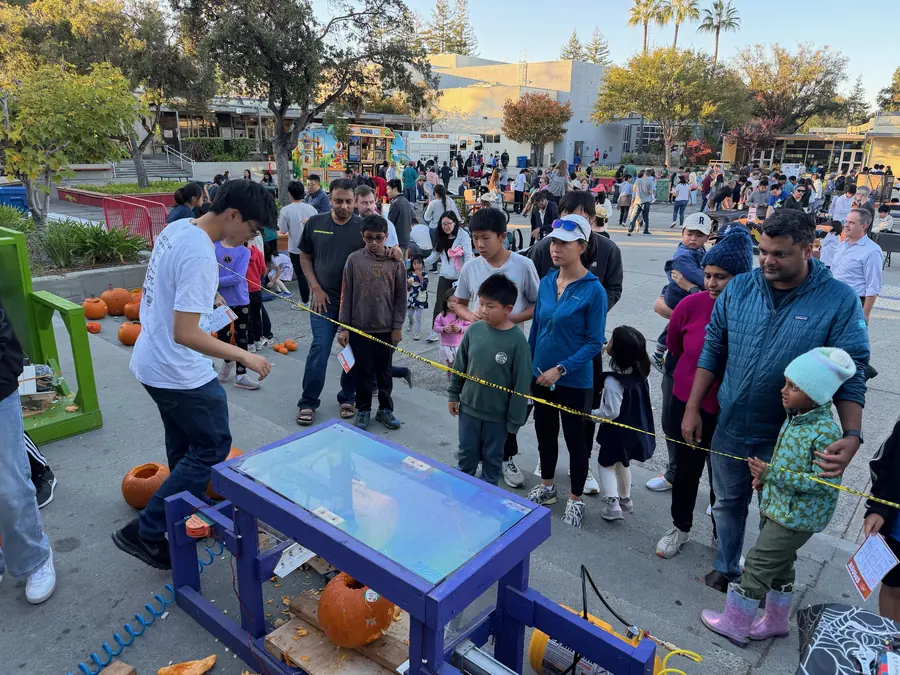
“It felt really rewarding to see those kids cheer and laugh when they saw their pumpkins get smashed.”
Lucius Ko, Class of 2026 — The Saratoga Falcon
Why we do it
Most Halloween pumpkins end up in a landfill.
US farms grew 1.44 billion pounds of pumpkins in 2024, and about 85% of the acreage is decorative, so most of it gets thrown out in the first week of November.
In a landfill a pumpkin rots without air and gives off methane, which traps far more heat than carbon dioxide. Most of the methane coming off landfills comes from food scraps. Composting lets the same pumpkin break down with air instead, and it ends up as dirt.
California has required organic waste to be kept out of landfills since 2022, under SB 1383, though nationally only about 5% of food waste is composted.
We compost around a thousand pounds a year.
Sources: USDA Economic Research Service (pumpkin production, ornamental share) · US EPA (food waste is responsible for an estimated 58% of the methane escaping US landfills) · EPA Landfill Methane Outreach Program (methane traps at least 28× more heat than CO₂ over a century) · CalRecycle (SB 1383).